Curlers Sweep Into Panic Over 'Enhanced Winter Olympics’ Threat
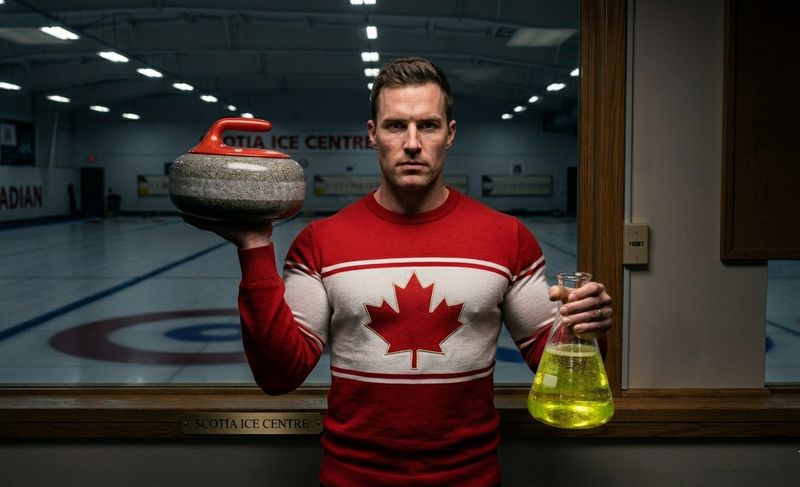
Some curlers are in full panic over the Enhanced Games coming to curling.
Calgary, CA – In the serene, sweater-clad world of Olympic curling, where the most intense physical demand is “sweeping vigorously while looking mildly concerned,” a crisis is brewing. As whispers of an “Enhanced Winter Olympics” inspired by the controversial Enhanced Games ripple through the sport, traditional curlers are clutching their brooms in outrage.
“Performance-enhancing drugs? In curling?” fumed Canadian skip Brian “The Hammer” McDougall, 47, while nursing a post-practice double-double. “Our sport is about strategy, camaraderie, and the subtle art of not throwing your back out on a sheet of ice. Now some juiced-up bro with rocket quads is going to hurl 42-pound stones like they’re beach balls? This is an affront to everything we stand for—mainly light cardio and overly sincere apologies.”
The Enhanced Games, which just kicked off in Las Vegas, allow supervised use of testosterone, HGH, and other enhancements as athletes chase superhuman records. Organizers call it “science-driven human potential.” Curlers see a slippery slope toward chaos. “What happens when someone hopped up on EPO hormones starts sweeping so fast the ice melts?” asked Swedish curler Ingrid Nilsson. “Our ice technicians are already overworked. Now they’ll have to mitigate damage to the sheet, because some lab created jock in Arizona decided he could curl. It’s barbaric.”
Critics point out that even the traditional Olympics have seen curling-related doping scandals, like the 2018 case involving banned Russian curler Alexander Krushelnitsky, who tested positive for meldonium. Although many joked the substance was optimized for cardiovascular events and largely useless in a low-exertion sport, it does bring to mind the darker side of competitive curling. It’s been an open secret, spanning decades, that most of the top curlers have “enhanced” their performance by relying on a Curler’s Cocktail of premium Canadian beer and sharp Wisconsin cheese before before official games, because those substances are usually untraceable within 24 hours.
Although cheese-loading and beer-stacking are common practice, some experts question the benefits, but allowing pharmaceutical embellishment before or even during matches, could change everything. Imagine a 250-pound curler with 3% body fat and precision muscle control delivering stones with pinpoint accuracy, the unthinkable optics not withstanding, it might be the end of the sport. Traditional curlers, with their more generous physiques and body fat averaging around 40%, would struggle to compete.
The World Curling Federation issued a measured statement: “We value the spirit of the game.” Translated from diplomat-speak: “Please don’t turn our polite ice chess into gladiatorial roid-rage sweeping.”
Meanwhile, a rogue faction of young curlers has reportedly begun micro-dosing creatine and higher end European cheeses “for strategic focus.” But, McDougall remains defiant. “We’ll stick to our natural advantages: like the ability to retain excellent hand-eye coordination after three beers. If they want to use enhancements, let them. Delivering a calm performance in a wool sweater, that’s what really separates the enhanced from the truly elite.”
As the Winter Games approach, one thing is clear: the stones will fly, the ice will crack, and somewhere a curler will still offer their opponent a polite “good shot” before the Enhancements wear off and reality sets back in.
Some information based on articles published by BBC and Time.
“Performance-enhancing drugs? In curling?” fumed Canadian skip Brian “The Hammer” McDougall, 47, while nursing a post-practice double-double. “Our sport is about strategy, camaraderie, and the subtle art of not throwing your back out on a sheet of ice. Now some juiced-up bro with rocket quads is going to hurl 42-pound stones like they’re beach balls? This is an affront to everything we stand for—mainly light cardio and overly sincere apologies.”
The Enhanced Games, which just kicked off in Las Vegas, allow supervised use of testosterone, HGH, and other enhancements as athletes chase superhuman records. Organizers call it “science-driven human potential.” Curlers see a slippery slope toward chaos. “What happens when someone hopped up on EPO hormones starts sweeping so fast the ice melts?” asked Swedish curler Ingrid Nilsson. “Our ice technicians are already overworked. Now they’ll have to mitigate damage to the sheet, because some lab created jock in Arizona decided he could curl. It’s barbaric.”
Critics point out that even the traditional Olympics have seen curling-related doping scandals, like the 2018 case involving banned Russian curler Alexander Krushelnitsky, who tested positive for meldonium. Although many joked the substance was optimized for cardiovascular events and largely useless in a low-exertion sport, it does bring to mind the darker side of competitive curling. It’s been an open secret, spanning decades, that most of the top curlers have “enhanced” their performance by relying on a Curler’s Cocktail of premium Canadian beer and sharp Wisconsin cheese before before official games, because those substances are usually untraceable within 24 hours.
Although cheese-loading and beer-stacking are common practice, some experts question the benefits, but allowing pharmaceutical embellishment before or even during matches, could change everything. Imagine a 250-pound curler with 3% body fat and precision muscle control delivering stones with pinpoint accuracy, the unthinkable optics not withstanding, it might be the end of the sport. Traditional curlers, with their more generous physiques and body fat averaging around 40%, would struggle to compete.
The World Curling Federation issued a measured statement: “We value the spirit of the game.” Translated from diplomat-speak: “Please don’t turn our polite ice chess into gladiatorial roid-rage sweeping.”
Meanwhile, a rogue faction of young curlers has reportedly begun micro-dosing creatine and higher end European cheeses “for strategic focus.” But, McDougall remains defiant. “We’ll stick to our natural advantages: like the ability to retain excellent hand-eye coordination after three beers. If they want to use enhancements, let them. Delivering a calm performance in a wool sweater, that’s what really separates the enhanced from the truly elite.”
As the Winter Games approach, one thing is clear: the stones will fly, the ice will crack, and somewhere a curler will still offer their opponent a polite “good shot” before the Enhancements wear off and reality sets back in.
Some information based on articles published by BBC and Time.