Early-Onset Bird Watching: A Growing Epidemic
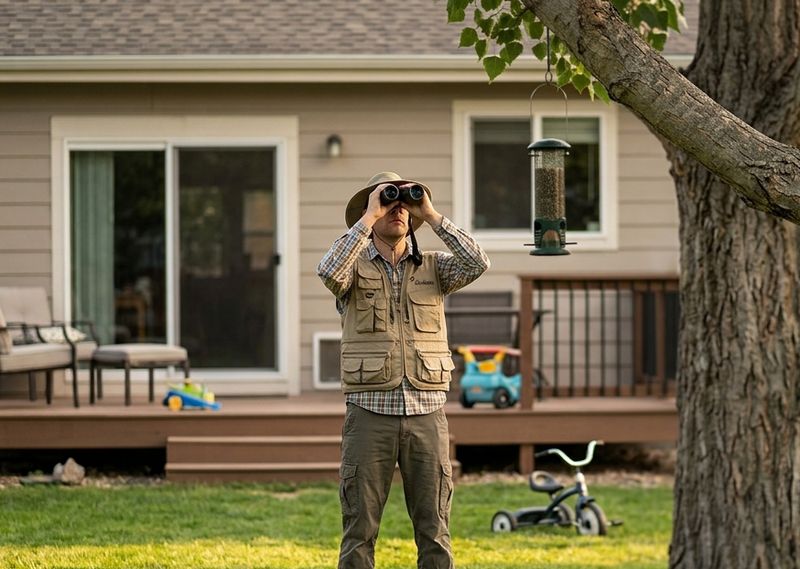
Epidemiologists have observed a concerning rise in cases of “early-onset bird watching,” where harmless curiosity escalates into binocular dependency, migration tracking, and increasingly questionable life choices.
BOULDER, CO – It begins with subtle, easily overlooked lapses in normalcy. A 38-year-old father pauses mid-sentence during a backyard barbecue, eyes glazing over as he tracks movement in the yard. The family watches helplessly as he points toward a bush and mutters, “Was that a tufted titmouse?”
The diagnosis? Early-Onset Bird Watching.
Once considered a late-stage condition reserved for retirees in beige vests, this tragic affliction is now rapidly moving down the demographic ladder. Citizens in their 50s—and, in devastating cases, even their 30s—are succumbing at an alarming rate.
Protocol for Preventive Intervention
Recognize the warning signs: Frozen by a window for hours; unexplained accumulations of seed mixes or binoculars; and a marked loss of interest in intimacy unless it involves bonded pairs of mallards. If you notice a loved one drifting, immediate intervention is critical.
“I don’t know who he is anymore. Our savings are gone, spent entirely on squirrel-proof feeders. He just stares out the window listening for warblers.” –Ashley Taylor, Heartbroken Spouse
Experts recommend aggressive “Normalcy Therapy”—forcing the patient to sit through back-to-back action movies with the blinds closed or watching weekend football to shock the senses back into mainstream culture. Remove all outdoor seating, confiscate any sunhats, and if they look toward a tree, gently but firmly redirect their gaze to a phone and encourage doomscrolling.
Coping with the Diagnosis
While there is no known cure, identifying the stage of progression can help guide outreach services. The following examples may indicate severity:
Based on birding articles published by rd.com, goodnewspost.co.uk, huffingtonpost.co.uk, and zmescience.com.
The diagnosis? Early-Onset Bird Watching.
Once considered a late-stage condition reserved for retirees in beige vests, this tragic affliction is now rapidly moving down the demographic ladder. Citizens in their 50s—and, in devastating cases, even their 30s—are succumbing at an alarming rate.
Protocol for Preventive Intervention
Recognize the warning signs: Frozen by a window for hours; unexplained accumulations of seed mixes or binoculars; and a marked loss of interest in intimacy unless it involves bonded pairs of mallards. If you notice a loved one drifting, immediate intervention is critical.
“I don’t know who he is anymore. Our savings are gone, spent entirely on squirrel-proof feeders. He just stares out the window listening for warblers.” –Ashley Taylor, Heartbroken Spouse
Experts recommend aggressive “Normalcy Therapy”—forcing the patient to sit through back-to-back action movies with the blinds closed or watching weekend football to shock the senses back into mainstream culture. Remove all outdoor seating, confiscate any sunhats, and if they look toward a tree, gently but firmly redirect their gaze to a phone and encourage doomscrolling.
Coping with the Diagnosis
While there is no known cure, identifying the stage of progression can help guide outreach services. The following examples may indicate severity:
- Early Stage: Downloading the Merlin Bird ID App; pointing out bird species or plumage to others
- Intermediate Stage: Intense anxiety about neighborhood cats; joining the Audubon Society
- Advanced Stage: Becoming non-verbal; inability to release binoculars
Based on birding articles published by rd.com, goodnewspost.co.uk, huffingtonpost.co.uk, and zmescience.com.