Neighborhood Crows Have a Group Chat, And You're The Topic
Avian intelligence is organic... and perhaps the AI we should all be questioning...
There’s a decent chance a crow knows who you are. Not in a vague, “hey that’s a human” sort of way. More like: that specific human with the beige peacoat and aging yellow lab. And if you’ve ever wronged one—even accidentally—there’s an even better chance it’s told its friends. Welcome to the organized, mildly judgmental, and surprisingly intelligent world of crows.
What They Know
Scientists have spent years confirming what your neighborhood crow has suspected all along: it’s smarter than most of us give it credit for. Studies have equated their cognitive abilities to that of a 7 year old human. Crows can solve multi-step problems, use tools, and even demonstrate reasoning abilities that rival primates. But the real headline is memory.
Crows don’t just recognize human faces—they remember them. Specifically. Personally. And for a long time. In controlled studies, crows identified individual humans associated with positive or negative experiences and reacted accordingly—even years later. So if you’ve ever felt watched while taking out the trash, it’s possible you weren’t paranoid—just cataloged.
What They Do
Here’s where things get a little less “bird” and a little more “organized intelligence network.” Crows don’t keep this information to themselves. They communicate. If one crow decides you’re a problem, it can pass that information along, effectively placing you on a shared blacklist. This is less “flock of birds” and more “distributed surveillance system.” A murder of crows on the look out for one, so to speak.
They also operate with social awareness that borders on strategy—warning each other, coordinating responses, and adapting behaviors based on group knowledge. It’s the kind of teamwork your company team building retreat almost instilled in you.
What They Offer
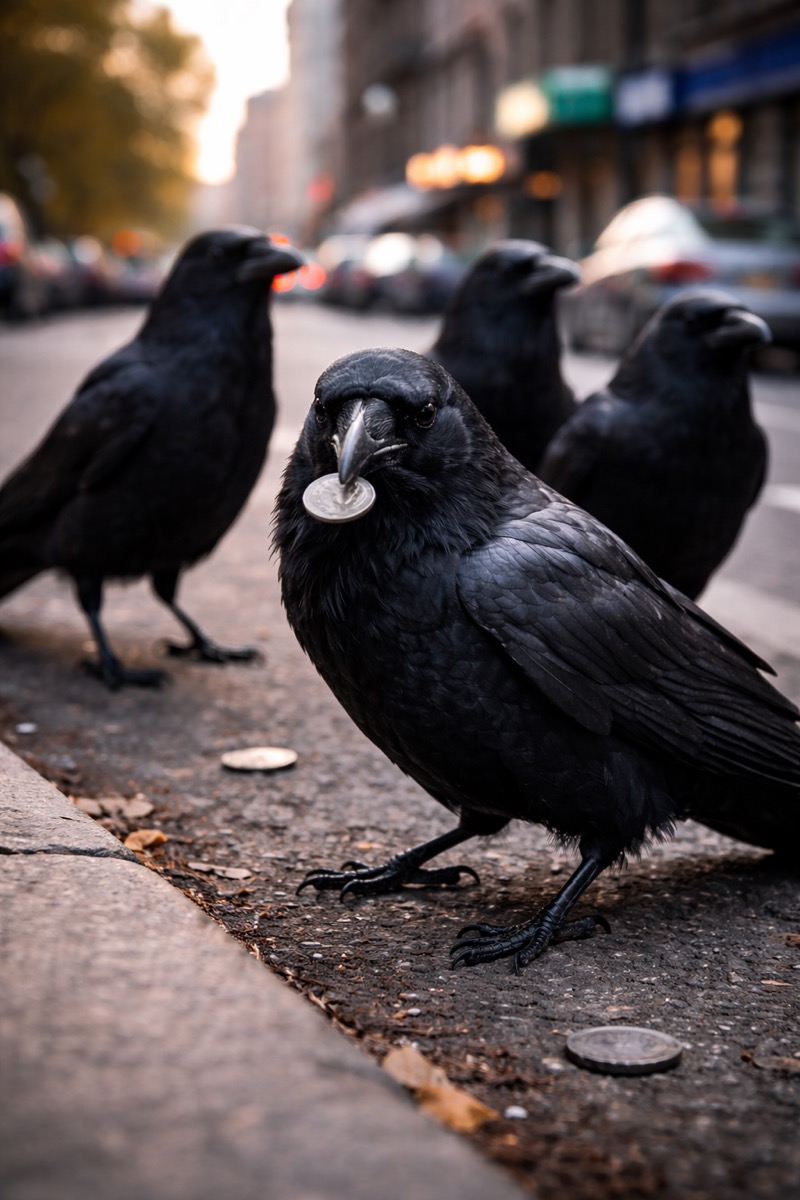
Now, to be fair, crows aren’t all grudges and gossip. Treat them well, and you might find yourself on the receiving end of what can only be described as a barter system. There are numerous documented cases of crows leaving small objects—shiny bits, trinkets, or natural items—for humans who consistently feed or help them. This behavior suggests something deeper than instinct—reciprocity. A recognition of value exchange. Possibly even appreciation… or at least a well-managed incentive program.
Who They Work For
In the city of Södertälje, a startup developed a system where wild crows were trained to pick up cigarette butts and deposit them into a machine in exchange for food. Yes—literal trash-for-snacks. The logic was simple: cigarette butts make up a massive portion of urban litter, and crows are smart enough to learn task-reward systems quickly. Early estimates suggested the method could significantly reduce cleanup costs. The program itself remained in pilot stages and didn’t fully scale, but the concept landed:
we’re now officially experimenting with interspecies gig economies.
A Modest Proposal
There’s something quietly brilliant about the Swedish approach—not because it’s perfect, but because it poses a different kind of question. Instead of asking, “How do we control nature?”
It asks, “What happens if we collaborate with it?” Even if the crow-cleaning initiative never fully takes off, the mindset lingers. It suggests a world where intelligence—human or otherwise—is something to work with, not just around.