Local Grandmother Awakens from 12-Year Facebook Coma, Immediately Asks Who ‘Reacted’ to Her Hospital Photo
She was then informed that her youngest grandchild had graduated college, her neighbor had moved twice, and Facebook itself was now primarily used to sell furniture and argue about HOA rules.
JACKSON, MS — In what medical professionals are calling “a cautionary tale with excellent Wi-Fi,” 78-year-old Patricia “Nana Pat” Wilkerson has reportedly awakened from a 12-year Facebook-induced coma, only to discover she has missed over a decade of real life while remaining remarkably active online.
According to family members, the incident began innocently in 2014 when Nana Pat created a Facebook account “just to keep up with the grandbabies.” Early activity included liking photos of casseroles, commenting “So proud!” on honor roll posts, and sending vaguely threatening messages to anyone who didn’t wear a jacket in winter photos.
“She was thriving,” said her daughter, Melissa. “She reconnected with high school friends, joined a church group, even discovered Minion memes. It was wholesome chaos.” Things took a turn in 2016.
Family reports indicate Nana Pat began following political pages “just to stay informed.” Within weeks, her activity escalated from sharing inspirational quotes to posting 37 consecutive articles titled variations of “WHAT THEY DON’T WANT YOU TO KNOW.” By 2018, she was engaged in daily comment-section debates with strangers named “PatriotEagle1776” and “WineMomRevolution.”
Doctors believe this marked the onset of what they now classify as “Chronic Engagement Syndrome,” a condition where the patient becomes physically present but mentally trapped in an infinite scroll loop. “She wasn’t unconscious in the traditional sense,” explained Dr. Alan Reeves. “Her body was in a recliner, but her mind was deep in a thread about gas prices.”
Over time, Nana Pat’s real-world interactions declined. She stopped attending family gatherings, instead opting to “check in” virtually with cryptic captions like “Some people need to wake up” and “Do your research.” Her grandchildren recall attempting conversations that were quickly redirected into monologues about algorithms, freedom, and a suspicious article involving windmills.
“She’d be at Thanksgiving, but also not,” said grandson Tyler, now 24. “Like she’d pause mid-sentence and say, ‘Hold on, someone is WRONG on the internet.’”
The family assumed it was a phase.
It was not.
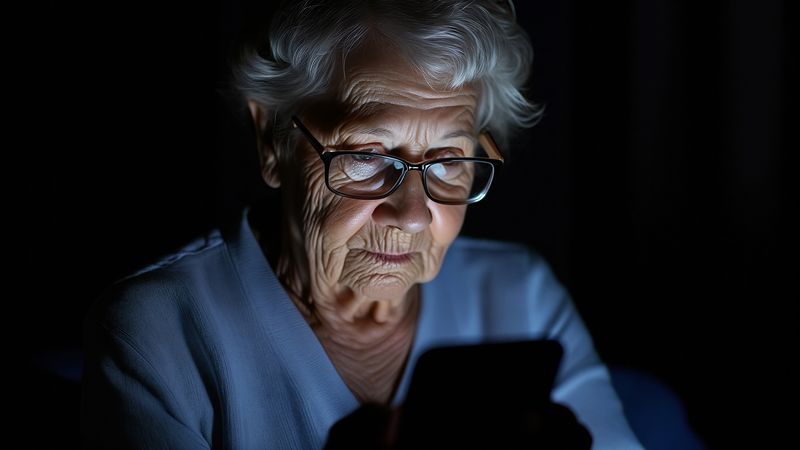
After 12 years, Nana Pat was found staring at her phone, motionless except for occasional thumb movements. When the device battery finally died—an event experts now describe as “the digital unplugging”—she blinked, looked around, and reportedly asked, “Did my post go viral?”
She was then informed that her youngest grandchild had graduated college, her neighbor had moved twice, and Facebook itself was now primarily used to sell furniture and argue about HOA rules.
“Oh my Lord,” Nana Pat reportedly whispered. “I missed everything.” In a poignant moment, she asked to see recent family photos—not filtered, not cropped, and not accompanied by 97 comments from distant acquaintances.
Medical professionals say recovery is possible, though challenging. Nana Pat has since taken cautious steps toward reintegration, including sitting through an entire dinner without checking notifications and asking her granddaughter how college was “without interrupting to fact-check.”
Experts warn that while Nana Pat’s case is extreme, symptoms are increasingly common.
“She’s lucky,” said Dr. Reeves. “Some never log off.”
According to family members, the incident began innocently in 2014 when Nana Pat created a Facebook account “just to keep up with the grandbabies.” Early activity included liking photos of casseroles, commenting “So proud!” on honor roll posts, and sending vaguely threatening messages to anyone who didn’t wear a jacket in winter photos.
“She was thriving,” said her daughter, Melissa. “She reconnected with high school friends, joined a church group, even discovered Minion memes. It was wholesome chaos.” Things took a turn in 2016.
Family reports indicate Nana Pat began following political pages “just to stay informed.” Within weeks, her activity escalated from sharing inspirational quotes to posting 37 consecutive articles titled variations of “WHAT THEY DON’T WANT YOU TO KNOW.” By 2018, she was engaged in daily comment-section debates with strangers named “PatriotEagle1776” and “WineMomRevolution.”
Doctors believe this marked the onset of what they now classify as “Chronic Engagement Syndrome,” a condition where the patient becomes physically present but mentally trapped in an infinite scroll loop. “She wasn’t unconscious in the traditional sense,” explained Dr. Alan Reeves. “Her body was in a recliner, but her mind was deep in a thread about gas prices.”
Over time, Nana Pat’s real-world interactions declined. She stopped attending family gatherings, instead opting to “check in” virtually with cryptic captions like “Some people need to wake up” and “Do your research.” Her grandchildren recall attempting conversations that were quickly redirected into monologues about algorithms, freedom, and a suspicious article involving windmills.
“She’d be at Thanksgiving, but also not,” said grandson Tyler, now 24. “Like she’d pause mid-sentence and say, ‘Hold on, someone is WRONG on the internet.’”
The family assumed it was a phase.
It was not.
After 12 years, Nana Pat was found staring at her phone, motionless except for occasional thumb movements. When the device battery finally died—an event experts now describe as “the digital unplugging”—she blinked, looked around, and reportedly asked, “Did my post go viral?”
She was then informed that her youngest grandchild had graduated college, her neighbor had moved twice, and Facebook itself was now primarily used to sell furniture and argue about HOA rules.
“Oh my Lord,” Nana Pat reportedly whispered. “I missed everything.” In a poignant moment, she asked to see recent family photos—not filtered, not cropped, and not accompanied by 97 comments from distant acquaintances.
Medical professionals say recovery is possible, though challenging. Nana Pat has since taken cautious steps toward reintegration, including sitting through an entire dinner without checking notifications and asking her granddaughter how college was “without interrupting to fact-check.”
Experts warn that while Nana Pat’s case is extreme, symptoms are increasingly common.
“She’s lucky,” said Dr. Reeves. “Some never log off.”