Drought Exposes Lost City and Reveals Opportunity for Capitalism
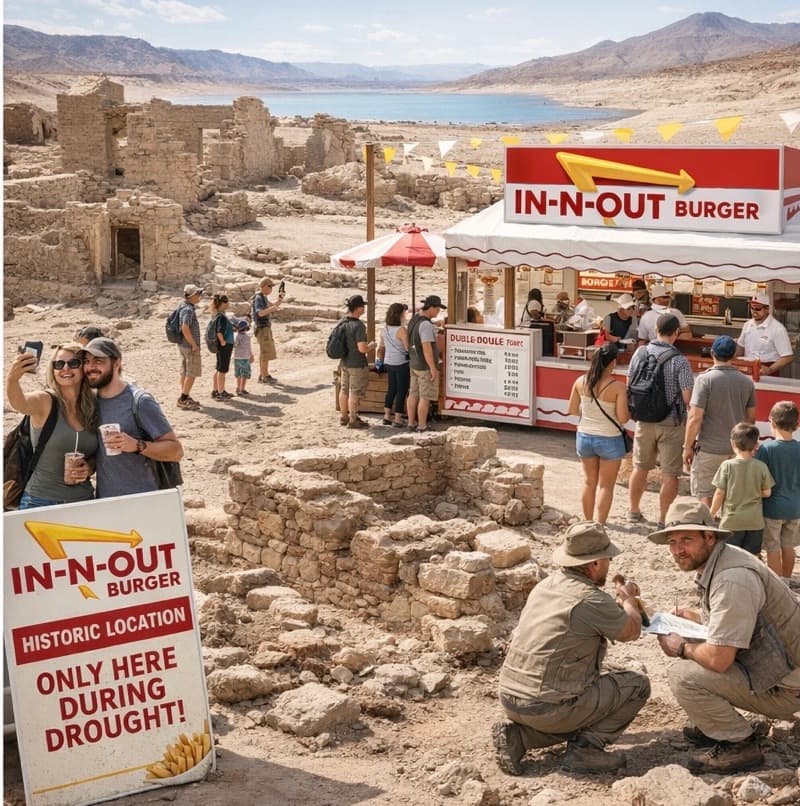
Lake Mead exposes profit potential.
In the summer of low water, the Colorado River finally revealed what decades of damming had submerged: the ghostly outlines of St. Thomas, Nevada—a town swallowed whole when the Hoover Dam’s Lake Mead filled in the 1930s. Streets, sidewalks, and foundations peeked through the parched lakebed like a set piece from a forgotten Western.
Archaeologists took notes, history buffs took photos, and, naturally, capitalism circled like vultures. Some envisioned eco-tours. Some imagined pop-up museums. And then came the truly inspired idea: a temporary In-N-Out burger, serving “Lake Mead’s First Fries Since 1938,” set up exactly where Main Street used to be.
Critics scoffed. Purists mourned. Pragmatists calculated ROI. Because if the town was only visible for a few weeks, why not monetize it while it lasted? Instagram influencers queued for selfies between submerged lampposts and cardboard menu boards. NFTs of “historic burger moments” quietly changed hands.
History, as it turns out, is only valuable when it comes with a cash register. And as the rains eventually reclaim St. Thomas, the pop-up burger joint will vanish, leaving nothing but soggy buns and digital proof of human ingenuity—or absurdity, depending on who’s judging.