KFC Squid Games 3D-Printed Meal: Because Actual Food Was Getting Complicated
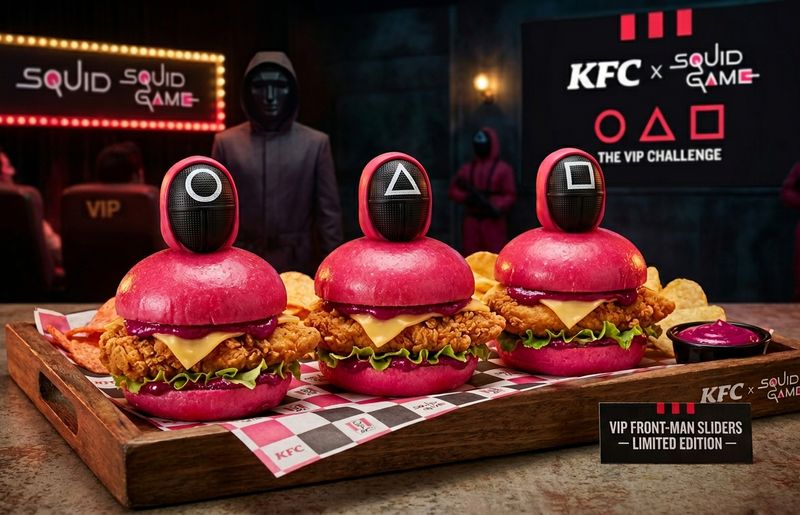
KFC and McDonald's have unveiled "high-tech nutrition" meals, featuring 3D-printed food based collectibles.
NEW YORK — Proving that a cinematic universe never truly dies if there’s high-fructose corn syrup left to pump into it, the fast-food industry has unveiled its high-tech, ultra-nutritious Summer line-up.
Leading the charge is a massive promotional tie-in for Netflix’s newly greenlit spinoff, Squid Game: The VIP Challenge. Because nothing honors a dystopian masterpiece about human desperation quite like a drive-thru combo, diners can now order the VIP Front-Man Sliders.
The sandwich features a shocking, bright magenta bun topped with an edible collectible precision 3D-printed geometric shape. Corporate nutritionists claim the meal represents a triumph in modern clean eating, utilizing advanced culinary tech to target a health-conscious demographic.
“We’ve isolated only the healthiest, naturally derived polymers.”
“We’ve isolated only the healthiest, naturally derived polymers,” said a corporate spokesperson, gesturing toward a promotional image of the vibrant trio. “The 3D-printed topper is 100% certified organic matter. It’s a nutrient-dense powerhouse, but it’s also structurally indestructible. If you choose not to eat it, the shelf life is approximately 6 years, making it a perfect collectible toy for your dashboard.” Interestingly, the nutritional information for the sandwich indicated that the bright magenta bun had an even longer shelf life of 11 years.
As The New York Times noted in an early culinary review, the industry's pivot to hyper-processed wellness seems paradoxically brilliant:"We are witnessing a bizarre era where marketing executives have successfully rebranded indestructible structural integrity as 'maximum freshness.' It is food designed not to nourish, but to endure."
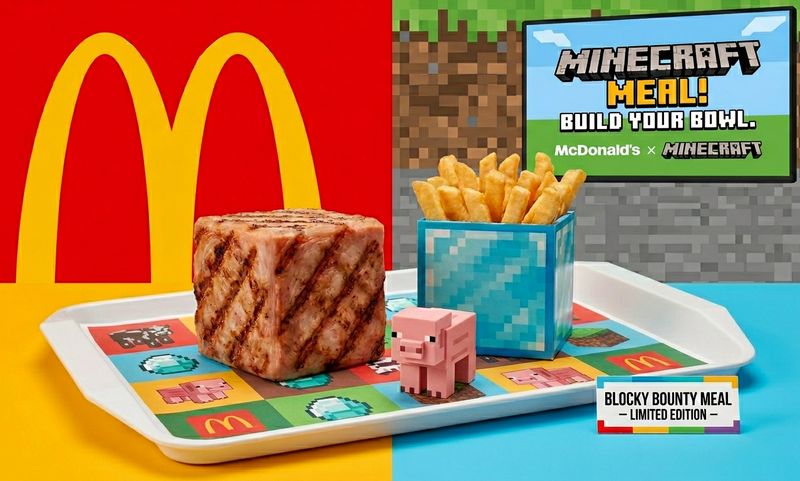
Not to be outdone in the health-and-wellness arena, McDonald's announced they are using the exact same technology for their upcoming Minecraft meals. Retail analysts for The Wall Street Journal, observed that "fast-food chains are no longer competing on taste, but on engineering." Mickey D’s contribution to public health will feature perfectly cubical, 3D-printed “Pork-Chop Blocks" engineered from organic lab grown algae. Marketing materials boast that the meal provides 100% of a child’s daily vitamin intake, provided they can chew and digest a food product engineered to resemble a Lego brick.
"Fast-food chains are no longer competing on taste, but on engineering."
Industry analysts predict the items will be viral sensations, but you might want some extra ketchup. Early reviews note that while the 3D-printed structures taste vaguely like a spicy rancid cardboard, health-conscious consumers are thrilled. It’s comforting to know that today’s fast-food giants care deeply about our nutrition, now that our leftovers could outlive us.
And that, perhaps, is the authentic taste they’re selling: “naturally artificial” flavorings, with the lingering aftertaste of corporate synergy.
Leading the charge is a massive promotional tie-in for Netflix’s newly greenlit spinoff, Squid Game: The VIP Challenge. Because nothing honors a dystopian masterpiece about human desperation quite like a drive-thru combo, diners can now order the VIP Front-Man Sliders.
The sandwich features a shocking, bright magenta bun topped with an edible collectible precision 3D-printed geometric shape. Corporate nutritionists claim the meal represents a triumph in modern clean eating, utilizing advanced culinary tech to target a health-conscious demographic.
“We’ve isolated only the healthiest, naturally derived polymers.”
“We’ve isolated only the healthiest, naturally derived polymers,” said a corporate spokesperson, gesturing toward a promotional image of the vibrant trio. “The 3D-printed topper is 100% certified organic matter. It’s a nutrient-dense powerhouse, but it’s also structurally indestructible. If you choose not to eat it, the shelf life is approximately 6 years, making it a perfect collectible toy for your dashboard.” Interestingly, the nutritional information for the sandwich indicated that the bright magenta bun had an even longer shelf life of 11 years.
As The New York Times noted in an early culinary review, the industry's pivot to hyper-processed wellness seems paradoxically brilliant:"We are witnessing a bizarre era where marketing executives have successfully rebranded indestructible structural integrity as 'maximum freshness.' It is food designed not to nourish, but to endure."
Not to be outdone in the health-and-wellness arena, McDonald's announced they are using the exact same technology for their upcoming Minecraft meals. Retail analysts for The Wall Street Journal, observed that "fast-food chains are no longer competing on taste, but on engineering." Mickey D’s contribution to public health will feature perfectly cubical, 3D-printed “Pork-Chop Blocks" engineered from organic lab grown algae. Marketing materials boast that the meal provides 100% of a child’s daily vitamin intake, provided they can chew and digest a food product engineered to resemble a Lego brick.
"Fast-food chains are no longer competing on taste, but on engineering."
Industry analysts predict the items will be viral sensations, but you might want some extra ketchup. Early reviews note that while the 3D-printed structures taste vaguely like a spicy rancid cardboard, health-conscious consumers are thrilled. It’s comforting to know that today’s fast-food giants care deeply about our nutrition, now that our leftovers could outlive us.
And that, perhaps, is the authentic taste they’re selling: “naturally artificial” flavorings, with the lingering aftertaste of corporate synergy.