McDonald's Launches McMRE with Famine Fries: “We Already Had The Shelf Life”
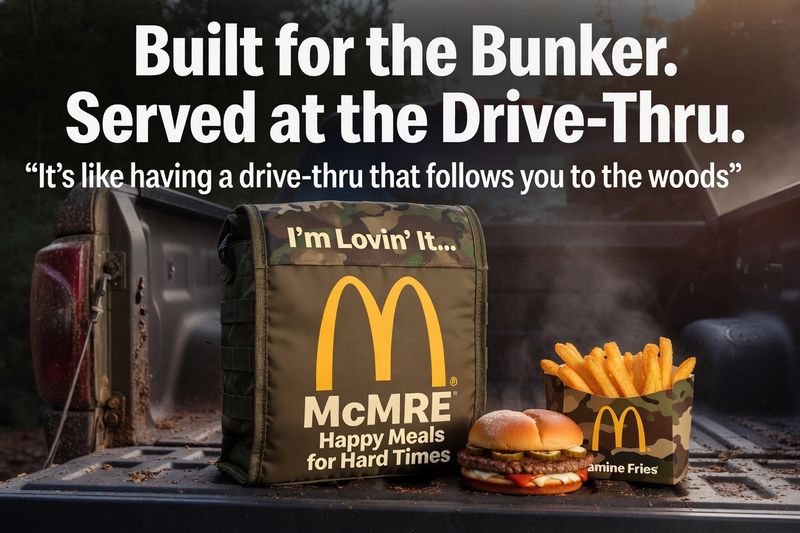
Facing declining sales, McDonald's has embraced the prepper market with the launch of the McMRE, a line of survival meals built around the legendary longevity of its burgers and fries.
Chicago, IL – In a bold pivot amid slumping sales, McDonald's announced today the launch of its new survivalist-focused menu: the McMRE. Packaged in rugged camouflage sacks emblazoned with the Golden Arches and tactical slogans like "I'm Lovin' It... Happy Meals for Hard Times," the meals repurpose classic items like the Big Mac, Quarter Pounder, and fries into shelf-stable "rations" for preppers, doomsday enthusiasts, and anyone bracing for uncertain times.
Company executives cited softening demand as the catalyst. U.S. same-store sales dropped 3.6% in early 2025, the steepest since the pandemic. With economic jitters, geopolitical tensions, and fluctuating gas prices keeping budget-conscious customers away, McDonald's spotted opportunity in the booming prepper market. "We've been losing the value seekers," one internal memo reportedly noted. "But bunker dwellers? They're loyal.”
"We've been losing the value seekers… But bunker dwellers? They're loyal.”
A McDonald's spokesperson framed it perfectly: "We already had the shelf life." It's not marketing spin. Decades of urban legends and real experiments confirm it. A Quarter Pounder, purchased by two Australian teens in 1995, reportedly remains "eerily intact" after 30 years without refrigeration. Accounts of McDonalds meals being consumed after being stored for decades in cupboards and sheds across America are commonplace.
Burgers left on counters for months or even years often look unchanged, dehydrated into a mummified state rather than rotting. Alarming sodium levels and high-heat cooking that strips moisture, work together to prevent mold and bacteria. Marketing materials for the McMRE line proudly states: Micro-organisms aren’t a problem, because it’s just not possible for living things to survive on our burgers.
“It’s just not possible for living things to survive on our burgers.” –Ron McDonald
McDonald's itself notes that in dry environments, its food effectively "mummifies" before decomposition sets in, much like homemade salt cured items under similar conditions. Fries achieve jerky-like permanence; a 62-day-old order showed "zero changes" in one viral test. A 20-year-old burger stayed mold-free in its original packaging. As one food science observation put it, these aren't immortal—they're just desiccated. Perfect for the end times.
The McMREs are also winning over hunters. No more lugging heavy coolers and ice to the duck blind or deer stand. Sportsmen can simply grab a camouflaged McMRE sack on the way out of town, toss it in the truck bed, and enjoy a familiar meal hours later without worrying about spoilage. "It's like having a drive-thru that follows you to the woods," said one early adopter from rural Wisconsin.
"It's like having a drive-thru that follows you to the woods” –Kurt S. Mitchell
The McMRE lineup includes the "Apocalypse Angus" (a non-perishable Quarter Pounder with "prepper pickles” and “tactical mayo”), "Famine Fries," and the flagship "Big Bunker," complete with special sauce packets that double as fire starters. Early focus groups of survivalists praised the familiarity: “It’s a nice change from dried beans, and tastes like normalcy," said one tester while reorganizing his ammo cans.
Critics, however, question the strategy. Whether this saves quarterly numbers or merely ensures the last cheeseburger on Earth bears the Golden Arches remains to be seen. In the meantime, stock up—your grandchildren's grandchildren might thank you. Or at least recognize the packaging.
Based on articles published in AP News, BBC, Food Republic, NBC News, Fox News, McDonalds and NY Post.
Company executives cited softening demand as the catalyst. U.S. same-store sales dropped 3.6% in early 2025, the steepest since the pandemic. With economic jitters, geopolitical tensions, and fluctuating gas prices keeping budget-conscious customers away, McDonald's spotted opportunity in the booming prepper market. "We've been losing the value seekers," one internal memo reportedly noted. "But bunker dwellers? They're loyal.”
"We've been losing the value seekers… But bunker dwellers? They're loyal.”
A McDonald's spokesperson framed it perfectly: "We already had the shelf life." It's not marketing spin. Decades of urban legends and real experiments confirm it. A Quarter Pounder, purchased by two Australian teens in 1995, reportedly remains "eerily intact" after 30 years without refrigeration. Accounts of McDonalds meals being consumed after being stored for decades in cupboards and sheds across America are commonplace.
Burgers left on counters for months or even years often look unchanged, dehydrated into a mummified state rather than rotting. Alarming sodium levels and high-heat cooking that strips moisture, work together to prevent mold and bacteria. Marketing materials for the McMRE line proudly states: Micro-organisms aren’t a problem, because it’s just not possible for living things to survive on our burgers.
“It’s just not possible for living things to survive on our burgers.” –Ron McDonald
McDonald's itself notes that in dry environments, its food effectively "mummifies" before decomposition sets in, much like homemade salt cured items under similar conditions. Fries achieve jerky-like permanence; a 62-day-old order showed "zero changes" in one viral test. A 20-year-old burger stayed mold-free in its original packaging. As one food science observation put it, these aren't immortal—they're just desiccated. Perfect for the end times.
The McMREs are also winning over hunters. No more lugging heavy coolers and ice to the duck blind or deer stand. Sportsmen can simply grab a camouflaged McMRE sack on the way out of town, toss it in the truck bed, and enjoy a familiar meal hours later without worrying about spoilage. "It's like having a drive-thru that follows you to the woods," said one early adopter from rural Wisconsin.
"It's like having a drive-thru that follows you to the woods” –Kurt S. Mitchell
The McMRE lineup includes the "Apocalypse Angus" (a non-perishable Quarter Pounder with "prepper pickles” and “tactical mayo”), "Famine Fries," and the flagship "Big Bunker," complete with special sauce packets that double as fire starters. Early focus groups of survivalists praised the familiarity: “It’s a nice change from dried beans, and tastes like normalcy," said one tester while reorganizing his ammo cans.
Critics, however, question the strategy. Whether this saves quarterly numbers or merely ensures the last cheeseburger on Earth bears the Golden Arches remains to be seen. In the meantime, stock up—your grandchildren's grandchildren might thank you. Or at least recognize the packaging.
Based on articles published in AP News, BBC, Food Republic, NBC News, Fox News, McDonalds and NY Post.